

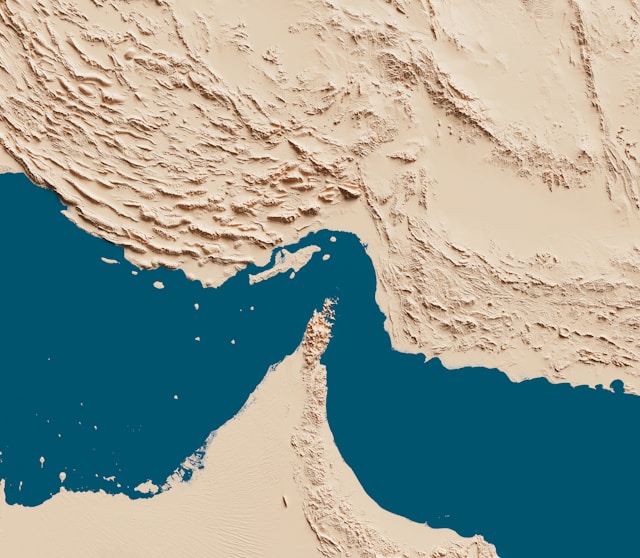
Blockade of the Strait of Hormuz and the Direct Impact on Our Industry
On the morning of February 28, 2026, US and Israeli armed forces launched the Iran war. On the same day, ships received radio messages from the Iranian Islamic Revolutionary Guard Corps announcing the closure of the strait. On March 2, Iran officially declared the closure for the first time.
Two days later, instead of the previous average of 138 ships per day, only two passed through the strait. On March 5, seven ships passed through the strait, three of which were tankers. The ships allowed through were reportedly Iranian tankers as well as vessels belonging to Chinese shipowners or clients. Nevertheless, after just one week of blockade, the number of ships queuing on both sides of the strait had already grown to nearly 1,000 in total.
The few shipping companies that risked the passage demanded freight rates that had risen to four times or more compared to pre-war levels, which was however manageable given the significantly increased oil prices caused by the war.
For our containers, the strait is not a direct main route, but a blockade of the Hormuz region naturally represents a cost and stability shock for the entire container and shipping industry. The disrupted networks lead to global capacity shifts. Conclusion: There is no quick end in sight to the Iran war. US President Donald Trump is instructing his advisors to prepare for a months-long naval blockade.
Source: Keystone, Reuters, NZZ, SRF/TR
Leave a Reply